
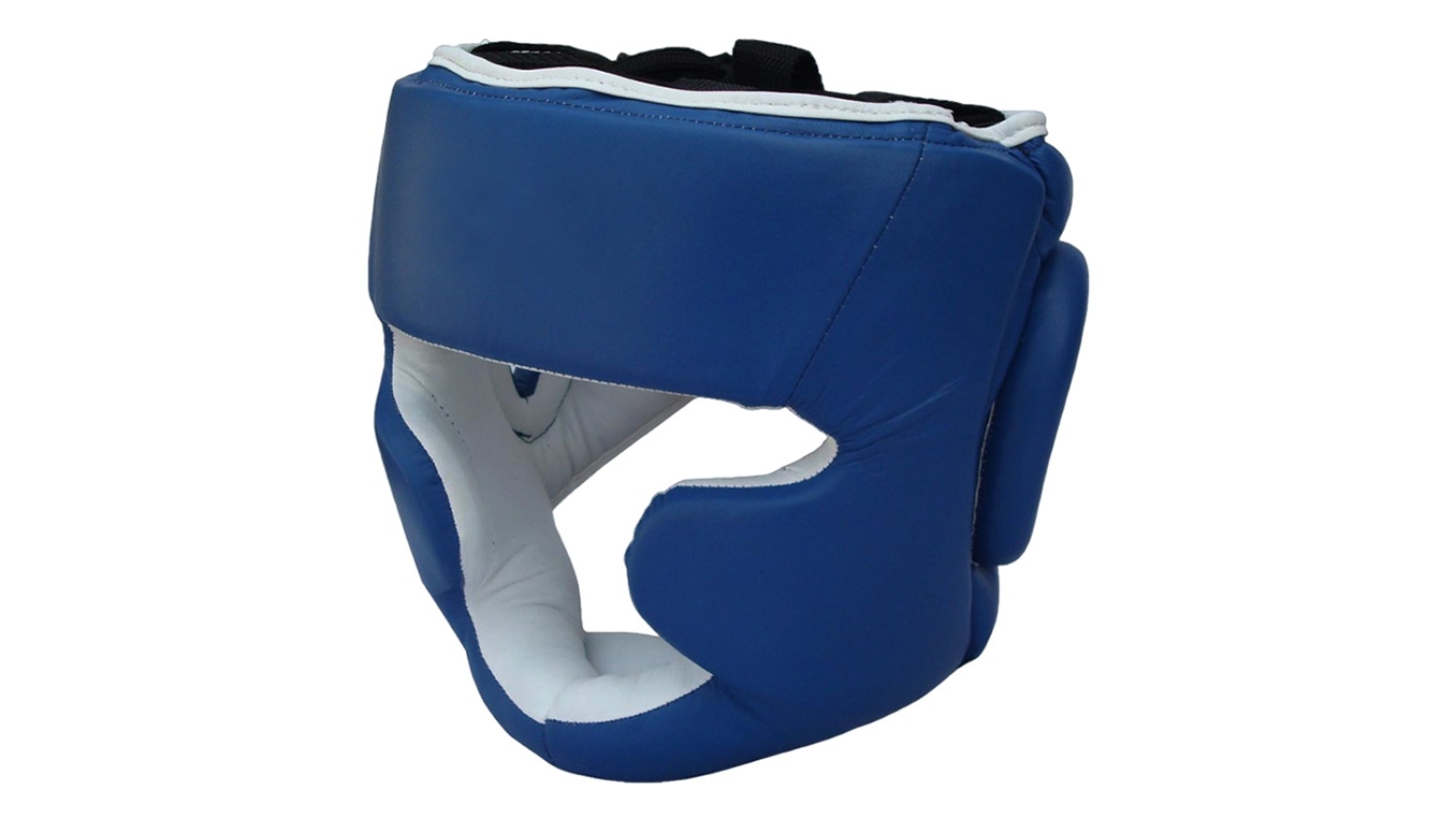
Short answer: there are four main types of boxing headgear: open-face (the standard training guard), cheek-protector, full-face with a nose bar, and competition headgear. Gyms usually stock open-face or cheek-protector guards for sparring, while full-face guards suit beginners and fighters protecting an injury. The right choice depends on who is sparring, how hard, and which federation rules apply if your members compete.
This guide explains each type, the materials and foam options, sizing, and what to put in your specification if you are ordering custom headgear for a gym or brand.
The Four Main Types of Boxing Headgear
| Type | Coverage | Visibility | Best for |
|---|---|---|---|
| Open-face | Forehead, temples, ears, back of head | Best | Everyday sparring, experienced boxers |
| Cheek-protector | Open-face plus padded cheeks and chin wrap | Very good | Mid-level sparring, MMA and kickboxing gyms |
| Full-face (nose bar) | Adds a padded bar across the face | Reduced | Beginners, injured fighters, heavy sparring |
| Competition | Light, open design built to federation specs | Best | Amateur bouts where headgear is required |
Open-face headgear
The most common training guard in the world. It protects the forehead, temples, ears and back of the head, leaving the face open for full vision. Boxers who spar regularly prefer it because it feels close to fighting without headgear.
Cheek-protector headgear
Thicker padding curves around the cheekbones and often wraps under the chin. It reduces cuts and bruising on the face while keeping good visibility, which is why many MMA and kickboxing gyms choose it as their house guard.
Full-face headgear with nose bar
A padded bar across the front stops direct punches to the nose and mouth. It restricts vision more than other styles, but it is the safest option for new members, older hobby boxers and anyone returning from a facial injury.
Competition headgear
Competition guards are lighter and more open. Rules on headgear vary between federations, age groups and genders, and approved models may need specific colours or marks. If your members compete, check their federation’s current rules before ordering.
Materials: Leather vs Synthetic
| Material | Feel and durability | Care | Cost |
|---|---|---|---|
| Genuine cowhide leather | Softens and moulds to the head; longest life | Wipe and air-dry; condition occasionally | Highest |
| Buffalo leather | Tough grain; resists scuffing | Same as cowhide | High |
| Premium PU synthetic | Consistent look; easy to clean | Wipe clean; good for shared gym kit | Lower |
Leather is the premium choice for fighter-grade and brand flagship headgear. PU synthetic is practical for gym “house” guards that many members share, because it wipes clean quickly. The same trade-offs apply to gloves — read our comparison of leather vs synthetic boxing gloves.
Padding and Foam Options
- Multi-layer EVA foam — the most common; firm outer layer with a softer inner layer for comfort
- High-density shock foam — for heavy sparring, spreads impact over a wider area
- Moisture-wicking lining — reduces sweat build-up and slipping during rounds
- Thinner competition padding — lighter, for bouts and speed sparring
More padding is not always better: an overly bulky guard can make the head a bigger target and slow head movement. Match foam to the sparring intensity in your gym.
Closures and Fit
| Closure | Advantages | Considerations |
|---|---|---|
| Hook-and-loop back strap | Fast on and off; ideal for gym classes | Wears over time; replaceable |
| Lace-up top | Fine adjustment of crown fit | Slower to adjust |
| Chin strap | Stops the guard rotating | Must be snug but comfortable |
Most gym headgear combines a rear strap with a chin strap. A guard that rotates or slips over the eyes during sparring is a safety problem, so fit matters more than style.
Boxing Headgear Sizing
Headgear is sized by head circumference, measured just above the eyebrows and around the widest part of the back of the head.
| Size | Typical head circumference |
|---|---|
| S | 52–55 cm |
| M | 55–58 cm |
| L | 58–61 cm |
| XL | 61–64 cm |
Sizes vary between brands. For a gym order, a size split weighted towards M and L covers most adult members; add S for youth classes and women’s programmes.
Which Headgear Should Your Gym Stock?
| Gym type | Recommended headgear |
|---|---|
| Boxing club with competitive members | Open-face for sparring plus competition guards |
| MMA or kickboxing gym | Cheek-protector as the house guard |
| Fitness boxing or beginner programme | Full-face with nose bar |
| Youth programme | Cheek-protector or full-face in smaller sizes |
| Fight team or brand | Leather open-face or cheek-protector with full branding |
Pair headgear with the rest of the sparring kit — see our complete boxing and MMA fight kit guide and Muay Thai shin guards buying guide.
How to Specify Custom Headgear
If you are ordering branded headgear, include these points in your enquiry:
- Style — open-face, cheek-protector, full-face or competition
- Material — cowhide, buffalo leather or PU synthetic
- Foam — standard EVA, high-density or competition-weight
- Colours — main panel, trim and stitching colours
- Branding — embroidered, printed or embossed logo on the forehead, sides or back strap
- Closure — hook-and-loop, lace-up or both
- Size split — quantities per size
- Packing — polybag, branded box or mesh bag
Our custom head guards are made to order in Sialkot, Pakistan, with your logo, colours and packaging.
Caring for Boxing Headgear
- Wipe the inside after every session with a damp cloth
- Air-dry away from direct heat, which cracks leather and breaks down foam
- Never store headgear wet inside a sealed bag
- Replace guards once the foam has flattened or the lining has torn
Frequently Asked Questions — Boxing Headgear
Q: What is the best type of boxing headgear for sparring?
A: Most experienced boxers spar in open-face headgear for the best visibility. Cheek-protector guards add facial protection and suit mixed-ability gyms.
Q: Does boxing headgear prevent concussions?
A: Headgear mainly reduces cuts, bruises and impact on the surface of the head. It does not prevent concussion. Controlled sparring and good coaching remain the main safety measures.
Q: Is leather or synthetic headgear better?
A: Leather lasts longer and moulds to the head, so it suits fighters and premium brands. PU synthetic is cheaper and easier to wipe clean, so it suits shared gym equipment.
Q: How should boxing headgear fit?
A: Snug, with no rotation when you shake your head, and with clear vision straight ahead and to the sides. The chin strap should be firm but should not press on the throat.
Q: Can I put my gym logo on headgear?
A: Yes. Logos can be embroidered, printed or embossed on the forehead, sides or back strap.
Q: How often should gyms replace headgear?
A: Replace when the foam feels flat, the lining is torn or the straps no longer hold. Heavily used gym headgear usually needs replacing sooner than personal guards.
Order Custom Boxing Headgear
Onrox International manufactures branded boxing headgear, gloves, pads and fightwear for gyms and brands from our factory in Sialkot, Pakistan, and ships worldwide.
Request a Headgear Quote → | Custom Head Guards → | Boxing & MMA Gear Range →